
Wax-Resin Barcode Ribbons
The versatile middle grade — more durable than wax, cheaper than resin
A wax-resin ribbon is a thermal transfer ribbon whose ink blends soft wax and hard resin. The blend gives a harder print than wax, with better resistance to smearing, scratching and many chemicals, at a lower cost than full resin. It prints on coated paper, semi-gloss paper and many matte synthetic labels, which is why most buyers who have outgrown wax end up here. We offer five wax-resin grades, CW-15, CW-20, CW-22, CW-25 and CW-30, slit to size in our DPCC-approved factory in Delhi.
A wax-resin ribbon has an ink that blends wax and resin, giving a harder print than wax. We supply CW-15, CW-20, CW-22, CW-25 and CW-30 for coated paper and many matte synthetic labels; polyester (PET), polypropylene (PP) and HDPE are listed for selected grades. Avoid it for smooth synthetic film facing harsh solvents or heavy abrasion; test resin instead.
What wax-resin ribbon means
Wax-resin ribbon is a blend. The wax gives a clean, sharp print at speed, and the resin makes the print harder and tougher. Because it is a mix, it sits between the two pure types on every measure: durability, printhead heat, print speed and cost.
Printer makers describe it as the ribbon for coated paper, semi-gloss paper and matte synthetic labels, where the print has to survive moderate abrasion and a wide range of chemical contact. Compared with wax, a wax-resin print smears and scratches less and holds up better to chemicals. Compared with resin, it prints at higher speeds and needs less heat.
Standard, medium and premium: one category, several recipes
Wax-resin is a ratio, not one recipe, and printer makers sell it in tiers. A standard wax-resin has more wax and less resin: it prints at low heat and high speed and suits everyday labelling. A premium wax-resin has more resin: the print is sharper, scratch and smudge resistance is higher, and on some labels it comes close to the durability of resin. Medium tiers sit in between and are aimed at fast printing lines.
We offer five wax-resin grades, CW-15, CW-20, CW-22, CW-25 and CW-30, so you can match the grade to the label instead of paying for durability you do not need. CW-30 works from -40°C to +80°C. The grade table on this page shows which label materials each grade prints on, and a free sample lets you check one on your own printer and labels.
Choose by label material first
Start with what you are printing on, and only then think about durability. Coated paper is the easy case: most of our wax-resin grades list it. Polyester (PET) and polypropylene (PP) labels are listed against fewer grades, so check the table before you order, and HDPE labels are listed for one grade only.
The order matters. A label material mismatch fails at once, with ink that will not stay on. A durability mismatch only shows up weeks later, when a label in the field stops scanning. If you are unsure what your label is made of, send us a piece, or use the ribbon selector.
Wax or wax-resin? A quick test
Use wax-resin instead of wax when any of these is true: the label is rubbed, stacked or handled; it may get wet or wiped; it meets oil, alcohol or a mild chemical; or it is a matte synthetic label. Stay with wax when the label is paper, dry, indoors, and gone within weeks.
Printer makers draw the line in the same place: wax for paper with little or no chemical or abrasion exposure, wax-resin for moderate abrasion and a wide range of chemical contact. Our wax vs wax-resin vs resin guide goes through the three side by side.
Pharma, food, shipping and cold chain
Printer makers list the same jobs for wax-resin again and again: shipping labels that get handled and stacked, product and retail labels, healthcare labels, asset tracking and food packaging. On pharma and food cartons the job is batch numbers, expiry dates and date codes that must stay legible through handling.
For cold chain, the label material and adhesive matter as much as the ribbon, so test the whole cycle on your own labels: print, freeze, bring to room temperature, then scan. CW-30 works from -40°C to +80°C, so it is the grade to test first for freezer jobs.
Printer settings for wax-resin
Wax-resin needs more printhead heat than wax. If you switch from wax and change nothing, the print can look faint or patchy, and it is easy to blame the ribbon when the setting is the cause. Raise darkness in small steps and stop at the lowest setting that gives a barcode that scans. Too high a setting can burn through the ribbon and wear the printhead early.
Wax-resin also prints at moderate speeds, slower than wax, and slower speeds usually give better print quality.
Coated, semi-gloss and matte: why the finish matters
Printer makers note that wax gives its best results on rougher surfaces such as uncoated paper, and they point wax-resin at coated paper, semi-gloss paper and matte synthetic labels. Resin is the ribbon they point at synthetic materials in general. So if a smooth or glossy synthetic label rubs off, do not simply push wax-resin darkness higher. Test a premium wax-resin or a resin ribbon on that label instead.
Wax-resin and your printhead
Because wax-resin runs hotter than wax, the printhead works harder on every label. You protect it by keeping darkness at the lowest setting that verifies, by using a ribbon at least as wide as the label so the back coating covers the whole printhead, and by keeping the printhead clean. The damage printer makers warn about comes from too high a darkness, a ribbon narrower than the label, or a poor back coating.
How to check a wax-resin print is good enough
Do not judge a ribbon by how black the print looks. Print a batch on your own printer and labels, then treat them the way the label will be treated: rub with a thumb, wipe with the cleaner or solvent used on your site, stack and handle them, let damp reach them if that will happen, and put one through the cold or heat the label will see. Scan the barcodes after each step and keep one untouched label to compare. Zebra's manuals say to set darkness by barcode quality, not by eye: use the lowest setting that still verifies. Printer makers also say every ribbon should be pre-tested for its end use.
When to step up to resin
Stay with wax-resin until the label meets something it cannot take. Move to resin when the label is polyester, polypropylene or another film and it will see harsh solvents or heavy abrasion that a premium wax-resin cannot take. If you are not sure, test a premium wax-resin first. If it passes your own rub, wipe and chemical test, it costs less than resin. If it does not, resin is the right ribbon.
What to send us when you order
Send five things and we can name the grade to test: your printer model; the label material and finish; the width and length, or the size on your last roll; the core size and which side the ink is on (inside or outside wound); and what the label meets in real life, such as handling, damp, chemicals or a temperature range. The ribbon should be at least as wide as the label and within your printer's limit.
You do not need to know a grade name. A photo of your last ribbon box, the printer model and a sample label are enough for us to match it. No minimum order on standard sizes, and we send a free sample so you can test before committing to volume.
Wax-Resin Barcode Ribbons: grades at a glance
| Grade | Prints on | Typical uses |
|---|---|---|
| CW-15 Eco Wax-Resin Ribbon | Coated paper, Semi-gloss labels, Matte synthetic labels | Eco-labelled product packaging; Food & beverage labels; Pharma outer packaging; Coated paper barcodes |
| CW-20 Wax-Resin Barcode Ribbon | Coated paper, Light synthetic labels, Polyester labels | Pharma compliance labels; Food packaging date codes; Coated synthetic labels; Outdoor use barcodes |
| CW-22 Premium Wax-Resin Ribbon | Coated paper, Polypropylene (PP) labels, Polyester (PET) labels, Synthetic labels | Pharmaceutical batch labels; Industrial part identification; Synthetic packaging labels; Durable product tags |
| CW-25 Super Premium Wax-Resin Ribbon | PP synthetic labels, PET polyester labels, HDPE labels, Coated paper in harsh environments | Cold-chain and refrigerated labels; Chemical container labelling; Compliance and regulated labels; High-speed industrial printing |
| CW-30 Industrial Wax-Resin Ribbon | Synthetic labels, Coated paper (heavy duty), PP and PET labels | Cold storage and freeze labels; Heavy industrial asset tagging; High-speed production lines; Outdoor weather-exposed labels |
Which label material prints with wax-resin barcode ribbons
| Label material | Grade |
|---|---|
| Coated paper | CW-15, CW-20, CW-22; CW-25 (harsh); CW-30 (heavy duty) |
| Semi-gloss / matte synthetic labels | CW-15 |
| Light synthetic labels | CW-20 |
| Polyester (PET) labels | CW-20, CW-22, CW-25, CW-30 |
| Polypropylene (PP) labels | CW-22, CW-25, CW-30 |
| HDPE labels | CW-25 |
Not sure? The ribbon selector narrows it in two questions, or see wax vs wax-resin vs resin.
Sizes, cores and winding
| Widths | 25mm – 160mm, custom |
|---|---|
| Lengths | 50m – 600m |
| Cores | ½ inch and 1 inch (punching available) |
| Winding | Inside and outside wound |
| Most ordered size | 110mm × 300m on a 1-inch core |
| Minimum order | No minimum order on standard sizes |
Popular Zebra printers: see the Zebra ZT410 ribbon, Zebra ZT230 ribbon and Zebra GK420T ribbon pages for the size, core and winding each one takes.
Last reviewed: 9 October 2026
5 grades in this range
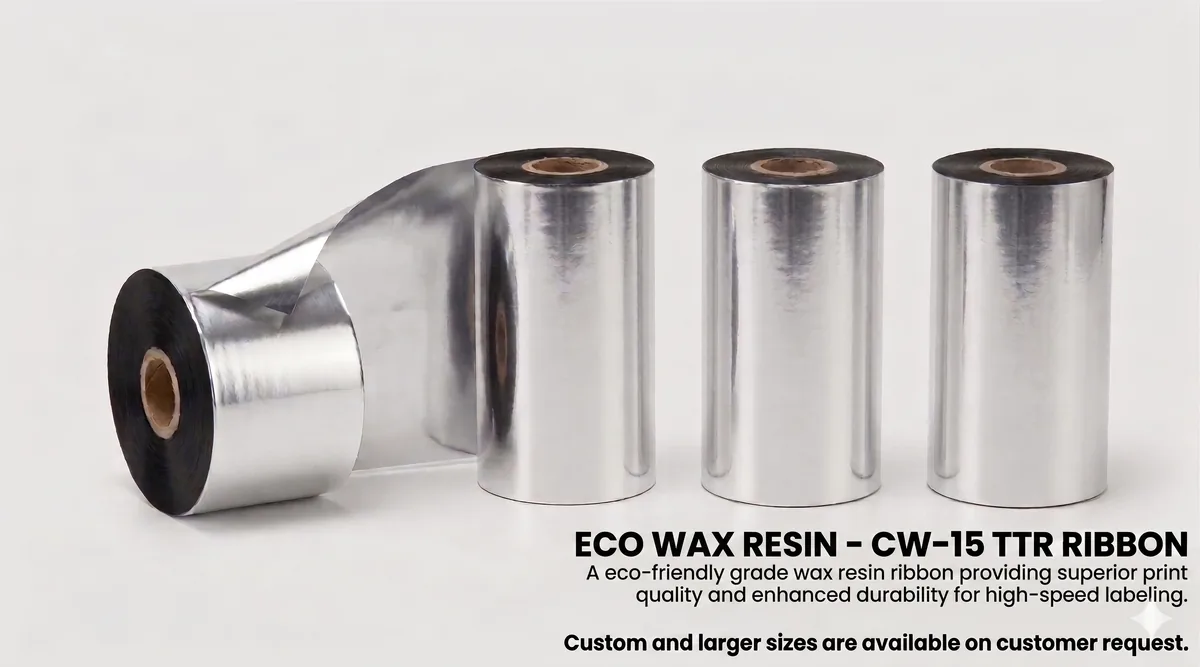
Eco Wax-Resin Ribbon
Performance meets eco-conscious manufacturing
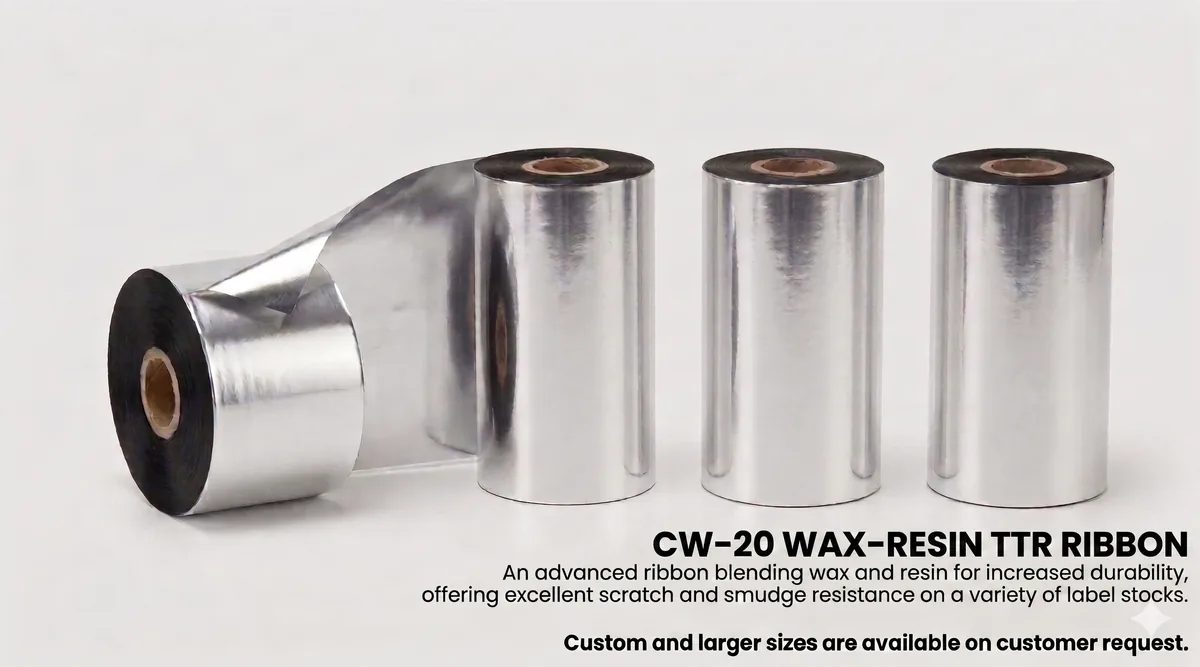
Wax-Resin Barcode Ribbon
The workhorse wax-resin for demanding applications
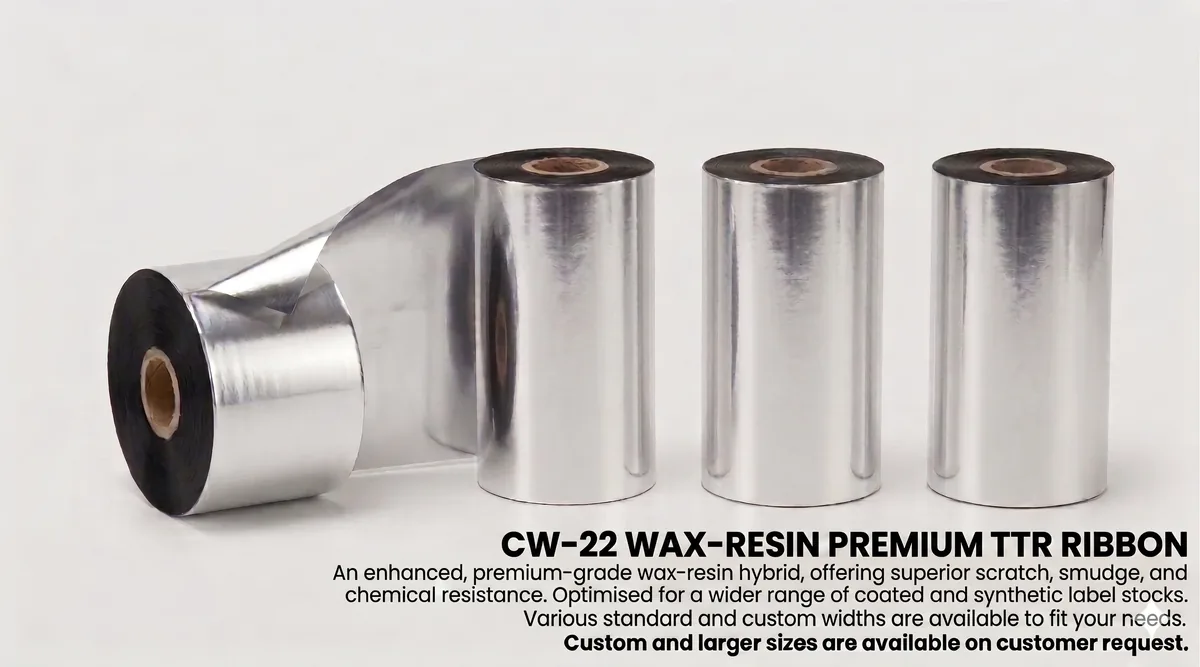
Premium Wax-Resin Ribbon
Premium durability for high-demand label environments
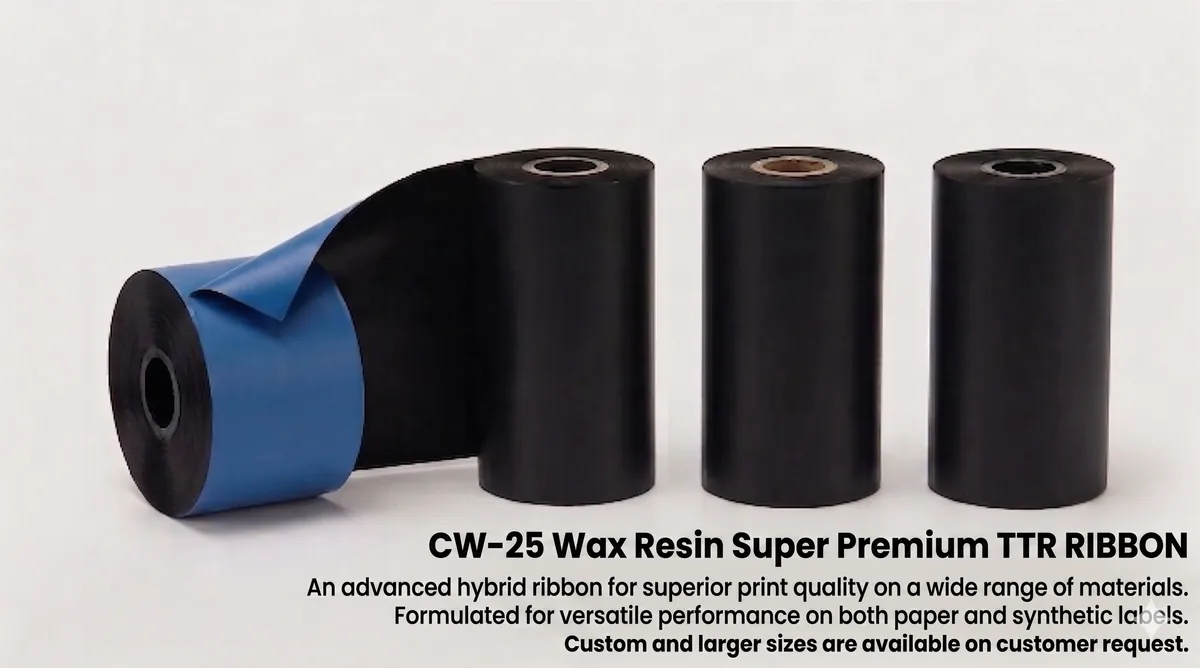
Super Premium Wax-Resin Ribbon
Top-tier wax-resin performance for critical applications
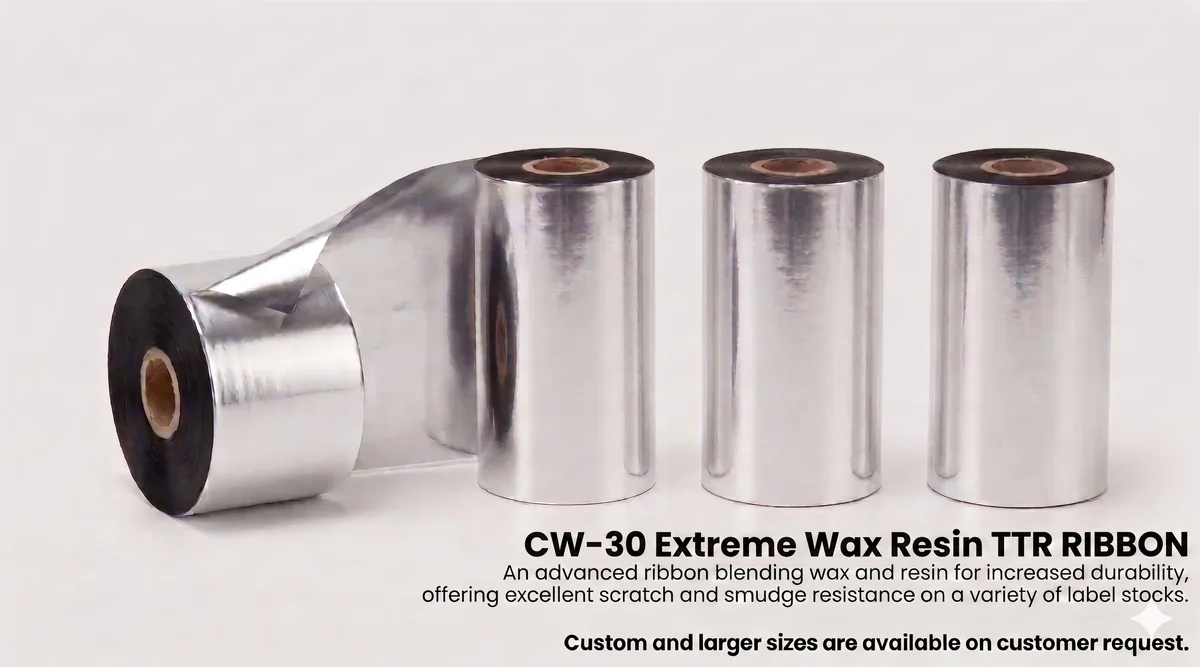
Industrial Wax-Resin Ribbon
Extreme conditions demand extreme performance
Frequently asked questions
What does wax-resin ribbon mean?+
It is a thermal transfer ribbon whose ink is a blend of wax and resin. The wax gives a clean, fast print and the resin makes it harder and tougher, so it sits between wax and resin on durability, heat, speed and cost.
What is a wax-resin ribbon used for?+
Coated paper and matte synthetic labels that need more than wax gives: batch and expiry codes, food date codes, shipping labels that are handled and stacked, and industrial part marking.
Is wax-resin ribbon better than wax?+
It is harder wearing, not automatically better. Wax-resin resists smearing, scratching and chemicals more than wax, but it needs more heat, prints a little slower and costs more. If your labels are dry, indoor paper, wax does the job for less.
What is the difference between standard and premium wax-resin?+
Standard has more wax: lower heat, higher speed, everyday indoor labelling. Premium has more resin: sharper print, stronger scratch and smudge resistance, and on some labels durability close to resin.
Is wax-resin the same as resin ribbon?+
No. Resin ribbon is mostly resin and bonds best to synthetic labels; it needs the most heat and the slowest speed. Wax-resin works on coated paper and matte synthetics at higher speed and lower cost.
Which wax-resin grade should I order?+
Choose by label material first, using the table on this page. Then pick the grade by what the label meets: handling, damp, chemicals or cold. Send us a sample of your label and we name the grade to test.
Do I need wax-resin or wax for coated paper labels?+
Wax-resin if the label is handled, stacked or exposed to damp; wax is enough for coated paper that stays dry and indoors.
Why does my wax-resin print look faint?+
Wax-resin needs more printhead energy than wax. Raise the darkness setting in small steps or slow the print speed until the barcode verifies, rather than assuming a ribbon fault.
Is wax-resin ribbon waterproof?+
It resists smearing and moisture better than wax, but no ribbon is waterproof on its own: the label material and adhesive matter too. For labels exposed to water or steam, test the ribbon on your own label.
Can wax-resin print on polyester and polypropylene labels?+
Yes: CW-22, CW-25 and CW-30 list both PP and PET labels; CW-20 lists light synthetic and polyester labels.
Which wax-resin ribbon works for cold-chain labels?+
CW-30 works from -40°C to +80°C. Cold-chain labels also depend on the label material and adhesive, so test the full cycle on your own labels: print, freeze, bring to room temperature, scan.
Which wax-resin grade is listed for pharmaceutical batch labels?+
CW-22's product page lists pharmaceutical batch labels. Test it on your own label before ordering volume.
When should I move from wax-resin to resin?+
When the label is polyester, polypropylene or another film and it will see harsh solvents or heavy abrasion. Test a premium wax-resin first; if it passes your own test, it costs less.
How should I store wax-resin ribbon?+
Printer makers' data sheets give about one year as the expected shelf life, stored before use at around 22°C and 50% relative humidity. Buy what you will use within that time.
Is there a minimum order or a sample?+
No minimum order on standard sizes, and we send a free sample so you can test on your own printer and labels.